Commercial Moves in Crayford
Reliable commercial relocation support for local businesses

When a business needs to move, the process is rarely as simple as loading boxes and driving to a new address. It can involve careful planning, tight timeframes, awkward access, specialist equipment, and the need to keep operations running with as little disruption as possible. That is why Commercial Moves in Crayford need to be handled with practical experience, local knowledge, and a clear step-by-step approach that suits real workplaces.
Crayford is home to a wide mix of business premises, from small offices and shops near local high streets to workshops, trade units, storage spaces, and larger commercial sites closer to industrial estates and surrounding routes. Every building type creates different challenges. Some premises have limited parking, shared entrances, or narrow loading areas. Others require early morning access, careful coordination with building management, or special handling for IT, machinery, stock, and files. A local team understands these conditions and can plan around them.
Whether you are relocating a small office, moving a retail unit, transferring warehouse items, or reorganising a busy workspace, the right service should be designed around your working day and your moving priorities. The goal is not just to move items from one place to another; it is to help your business continue operating with confidence before, during, and after the move.
Why businesses in Crayford choose a local commercial moving service

There are many reasons local customers prefer a team with direct experience in and around Crayford. Familiarity with nearby roads, delivery access, business parks, and commercial estates can make a real difference when timing matters. A move that may seem straightforward on paper can quickly become stressful if a van cannot park close enough, if goods lift access is limited, or if unloading has to be managed around other tenants.
Local business owners often want more than transport. They want commercial relocation support that helps them prepare properly, reduce downtime, protect equipment, and keep staff informed. That is especially important for offices with confidential records, shops with stock that must stay organised, and trade businesses that depend on tools, parts, or specialist items being ready for use as soon as the move is complete.
Choosing a local company also means it is easier to schedule surveys, discuss access concerns, and arrange move dates that work around the realities of your premises. If your site has shared entrances, limited loading space, or time restrictions imposed by a landlord or managing agent, those details can be factored into the plan from the start rather than becoming last-minute problems.
Types of commercial moves we help with
Commercial moves can vary widely, and a good service should be flexible enough to support different sectors, property types, and business sizes. In Crayford and the surrounding area, customers commonly need help with:
- Office moves for small and medium-sized teams
- Retail relocations, including shop fittings and stock
- Warehouse and storage transfers
- Workshop and light industrial moves
- Equipment removals and re-setup support
- Archive, filing, and document relocation
- Internal office changes and departmental moves
- Multi-location business transfers
Some businesses need a full end-to-end relocation, while others only need help with the heavy or awkward items. A flexible service can cover both. If you only require packing support, furniture dismantling, or safe transport for specialist items, those tasks can be built into the moving plan. This is particularly useful for local businesses that need a practical, cost-conscious approach rather than a one-size-fits-all package.
Many commercial premises in Crayford sit alongside busy roads or are part of mixed-use locations where timing and coordination matter. For that reason, the best move plan is one that matches your actual day-to-day operations, not an idealised version of them.
What is included in a commercial move

A professional business move should be more than transport on the day. It should provide structure, reassurance, and a clear process that helps reduce disruption. Depending on your requirements, a commercial move service can include a range of practical tasks designed to make the relocation smoother.
Typical inclusions may cover an initial assessment, planning for access and parking, packing supplies, dismantling and reassembly of furniture, careful handling of office equipment, secure loading, transport, and unloading at the destination. If required, items can be grouped by department, room, team, or priority so that your new premises are easier to organise once everything arrives.
For some customers, additional help is needed with labelling, crate management, fragile items, or the transfer of IT equipment. Businesses with computer systems, printers, monitors, and network hardware should always take a careful approach so that setup can begin quickly and assets are protected in transit. The service should also account for any bulky furniture, filing cabinets, shelving, display units, or stock that needs particular handling.
How the move process usually works
Commercial removals are easiest when the process is organised well in advance. A structured move gives you time to prepare your team, inform building managers, and reduce disruption to customer service. While every business move is different, the overall process usually follows a logical path.
- Initial enquiry and discussion of your move requirements
- Assessment of premises, access, and any special handling needs
- Planning the move date, timings, and order of tasks
- Preparation of packing materials, labels, and equipment
- Safe dismantling, packing, loading, and transport
- Unloading and placement of items at the new premises
- Reassembly and final checks where included
This kind of approach helps prevent delays and confusion on the day. It also gives your team a clearer picture of what to expect. If your company is moving from a busy office in Crayford into a unit in a nearby area such as Bexleyheath, Dartford, or Erith, careful planning becomes even more important because traffic, access windows, and unloading arrangements can vary from one site to the next.
Good communication matters throughout. The move should not feel rushed or improvised. Instead, it should feel controlled, well timed, and appropriate for the size and type of your business.
Local considerations that matter in Crayford

Crayford has its own practical moving challenges, and local experience can make a real difference. Some commercial properties offer straightforward access and dedicated parking, while others require careful coordination around shared bays, narrow approach roads, or nearby residential streets. In busy periods, even a short loading delay can affect the schedule for the whole day.
Businesses located near town centres, retail parades, light industrial estates, or transport corridors may also face issues such as limited stopping time, pedestrian traffic, or restricted vehicle access. A local team will know to plan around these details rather than discovering them when the van arrives. That can save time, reduce stress, and help protect your business continuity.
There is also the question of property type. A ground-floor office move is not the same as relocating a unit on an upper level, a storeroom in a shared building, or a workshop with heavy equipment. The more precise the planning, the smoother the move. This is why commercial relocation services in Crayford often work best when they are based on a proper understanding of the site, the building, and the business operating there.
Office moves for businesses of all sizes
Office moves are one of the most common types of commercial relocation. They can involve desks, chairs, filing systems, cabinets, desktop computers, meeting room furniture, and sensitive documents. Even a small office can generate a surprising amount of packing and coordination, especially if staff need to return to work quickly after the move.
For local businesses, the main concerns are usually speed, organisation, and care. Files should be kept in sequence, office furniture should be dismantled and reassembled properly, and IT equipment should be handled in a way that reduces the risk of damage. If you are moving between offices in Crayford or to a nearby area, it helps to have a plan for both the old premises and the new one so that handover and setup can happen efficiently.
Some office customers also need evening or weekend scheduling to avoid interrupting clients or staff. That can be especially useful for professional services, small agencies, and teams with customer-facing operations. Minimising downtime is often the biggest priority, and the moving plan should reflect that from the start.
Retail, shop, and hospitality moves
Retail and hospitality relocations need a careful balance of speed, protection, and presentation. Stock, shelving, display units, till systems, counters, and back-of-house supplies all need to be moved in a way that supports a quick reopen. In customer-facing businesses, the move should protect both stock value and trading continuity.
Shops in and around Crayford may have limited frontage space, tight delivery access, or shared access with neighbouring businesses. That means the move needs to be coordinated carefully, especially if products are fragile, valuable, or arranged in a specific order. A good commercial moving team will pay attention to labelling, placement, and sequence so that your setup at the new location is easier to manage.
Hospitality businesses, including cafés, takeaway sites, and small food businesses, may also need support moving tables, seating, kitchen equipment, storage, and cleaning supplies. In these cases, the emphasis is often on efficiency and the safe handling of bulky items. A smooth move can make reopening far easier, particularly when there are fixed launch dates or agreed handover times.
Industrial, workshop, and storage moves
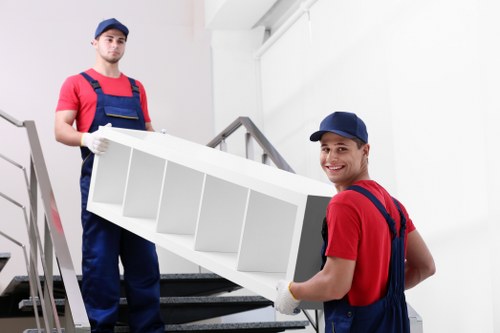
Industrial and workshop moves often require more than standard lifting and carrying. Heavy machinery, tools, racks, stock, and specialist supplies may need extra care, proper planning, and equipment suited to the items being moved. Even if the move is not a full-scale factory relocation, the weight and shape of workshop goods can create challenges that need a considered approach.
For trade businesses in Crayford and nearby commercial zones, the move may also involve organising consumables, maintenance items, and equipment that needs to be returned to service quickly. That makes accurate labelling and room-by-room or zone-by-zone placement particularly useful. It is often easier to continue working if everything arrives in a logical order rather than in mixed loads.
Storage moves can be just as demanding, especially if items have been kept for a long time and need sorting before transport. Whether you are moving to a larger unit, consolidating locations, or changing your storage setup, clear inventory and practical planning can help avoid unnecessary trips, delays, and confusion on the receiving side.
Preparing your business for moving day
Preparation is one of the biggest factors in a successful commercial move. The more organised your team is before moving day, the smoother the relocation is likely to be. Good preparation reduces wasted time, protects items, and helps the moving crew focus on safe handling rather than on last-minute sorting.
A useful starting point is deciding what will move, what will be discarded, and what can be archived or stored elsewhere. Businesses often discover that a move is the ideal time to review old paperwork, broken furniture, unused equipment, and stock that no longer needs to be transported. This can reduce volume and help the new premises start in a more organised state.
Simple actions taken in advance can make a major difference. For example, labelling desks, cupboards, and boxes by department or room can cut down on confusion when items arrive at the new site. If staff are packing their own work areas, they should know exactly what is expected of them and when everything needs to be ready.
- Back up digital information before the move
- Label items clearly by team, room, or priority
- Notify staff of deadlines and access arrangements
- Separate essential items from non-essential items
- Remove personal or confidential materials where needed
- Check parking, loading, and building access details
- Keep keys, codes, and contact names organised
Checklist for moving week
As the move gets closer, a structured checklist helps everyone stay on the same page. It is especially useful for office managers, operations teams, and business owners who are balancing the move with normal day-to-day work.
Before moving day, try to confirm the following:
- Final move date and agreed time window
- Access arrangements for both properties
- Any restrictions on lifts, loading bays, or parking
- Who will oversee the move on each site
- Which items require special handling
- Whether furniture needs dismantling in advance
- How fragile or confidential items will be managed
- Where key equipment should be placed at the destination
If your business operates across several sites or shared workspaces, it can also help to assign one person to coordinate questions on the day. That person can speak to the moving team, building management, or staff members so that decisions are made quickly and the move stays on track.
Pricing factors for commercial moves
What affects the cost of a business relocation?
Commercial move pricing depends on several practical factors. Because every business is different, the cost is usually shaped by the scope of the job rather than by a single fixed formula. Understanding these factors can help you request a more accurate quote and compare service options more confidently.
Typical pricing considerations include the volume of items, the type of property, the number of floors involved, the distance between premises, access conditions, whether furniture must be dismantled and rebuilt, and whether packing materials or specialist handling are needed. Moves that require longer loading times, extra labour, or out-of-hours scheduling may also need additional planning.
Clear information usually leads to clearer quotes. If you can describe your business type, access requirements, item list, and preferred dates, the moving company can give you a more realistic proposal and avoid surprises later. That is particularly helpful for Crayford businesses working within tight budgets or fixed deadlines.
It is also worth remembering that the cheapest option is not always the best one for commercial relocation. Delays, damaged goods, or poor planning can create extra cost through lost time and disruption. A well-managed move can be more valuable than a rushed one, especially when your business depends on quick reopening.
What to look for when choosing a mover
When comparing services for commercial moves in Crayford, customers often want reassurance that the team can manage their type of premises and their type of workload. Look for a company that asks the right questions, explains how the move will be organised, and is comfortable dealing with the practical realities of business relocation.
Useful signs of a dependable commercial mover include:
- Experience with office, retail, industrial, or mixed commercial sites
- Ability to plan around access, parking, and timing restrictions
- Flexible support for packing, dismantling, and reassembly
- Careful handling of IT, documents, and specialist items
- Clear communication before and during the move
- A practical approach to reducing disruption
A local company can be especially useful if your premises are in a busy part of Crayford or near surrounding areas where access can change throughout the day. Local knowledge is not just about geography; it is about understanding how business moves work in real conditions.
Areas covered around Crayford
Supporting businesses across nearby locations
Commercial customers in Crayford often need relocation support not only within the town itself but also across nearby parts of South East London and North Kent. Business moves may involve short transfers between local premises or longer relocations to surrounding commercial zones.
Areas commonly linked with Crayford commercial work can include Dartford, Bexleyheath, Slade Green, Erith, North End, Barnehurst, Bexley, and surrounding business districts. Depending on the job, routes may also connect with industrial and office locations beyond these immediate areas.
If your business operates from multiple sites, a local mover can help with staged relocations, partial transfers, and phased moves that keep parts of the business running while the rest is being changed over. That can be especially useful for growing companies, shared offices, and businesses moving between storage and trading spaces.
Frequently asked questions
Do commercial moves have to happen outside business hours?
Not always. Some businesses prefer evenings or weekends to reduce disruption, while others can move during standard hours if the site and workload allow it. The best timing depends on your operation, building access, and how quickly you need to resume work.
Can the team move office furniture and IT equipment?
Yes, commercial moves often include desks, chairs, cabinets, filing systems, monitors, printers, and related equipment. If your IT setup is more complex, it is helpful to discuss how items should be handled, labelled, and placed at the new premises.
What if our building has limited parking or loading space?
This is very common in and around Crayford. A local move plan should take access into account early so that vehicle positioning, timing, and carrying distances are all considered before moving day.
Can you help with dismantling and reassembly?
Many commercial relocations require furniture to be taken apart and put back together. This can help with safe transport and makes it easier to fit items into the new space properly.
How far in advance should we book?
It is sensible to arrange your move as early as possible, especially if you are working to a fixed handover date, an office lease deadline, or a seasonal trading schedule. Early planning also helps with surveys, packing, and staff preparation.
What should we do with confidential documents?
Confidential files should be separated, labelled carefully, and handled according to your internal procedures. If documents must be moved, they should be packed and transported in a way that protects privacy and keeps records organised.
How a local move supports your business continuity
For many organisations, the biggest worry is not the move itself but what happens to operations during the transition. Customers still need to be served, staff still need to work, and important equipment still needs to be available. This is where a practical commercial removals service makes a difference.
By planning the order of items, organising labels, and keeping essential equipment separate, you can create a move that supports continuity rather than interrupting it. Some businesses choose to move in stages, starting with non-essential items and leaving critical systems until the final phase. Others prefer a single well-managed transfer so they can reopen as quickly as possible.
The right approach depends on how your business works. A small professional office may need a simple overnight move, while a trade unit might need multiple runs and detailed inventory handling. Either way, the process should be shaped around keeping your business functioning with as little downtime as possible.
Why Crayford businesses benefit from specialist moving support
Commercial relocation is more demanding than a standard household move because there is usually more at stake. Items may be more valuable, access may be more restricted, and the impact of delays can be more serious. That is why specialist support matters. A business-focused service is designed to work with deadlines, site rules, and the need to protect working assets.
Crayford’s mix of offices, trade premises, retail units, and storage locations means no two jobs are exactly alike. Local support gives you the advantage of someone who understands how varied the area is and how to plan around that variation. This can save time, reduce frustration, and make the relocation feel more manageable.
If you are planning a move soon, it is worth taking the time to discuss your specific requirements and ask about the most practical way to handle them. The more your mover knows about the site and the business, the easier it becomes to create a move plan that works.
Request a quote for Commercial Moves in Crayford
If you are preparing for a business relocation, the best next step is to get a tailored quote based on your actual premises, items, and timing. That way, you can plan properly and make informed decisions about packing, access, scheduling, and support levels. A good quote should reflect your business needs rather than forcing you into a standard package that does not fit.
Whether you are moving a small office, a retail unit, a workshop, or a storage space, our approach to Commercial Moves in Crayford is built around practical service, clear communication, and care for your equipment and stock. We can help you think through the move, prepare the right way, and keep the process organised from start to finish.
Contact us today to discuss your move requirements, request a free quote, or book your service now. If you want a smoother relocation with less disruption to your business, the easiest time to start planning is before the pressure builds.